 DAIS
DAISThe internet is full of shiny things
Learn what to pick up.
DAIS is a practical way to spot manipulation, check sources and reach conclusions no stronger than your evidence. Starting with a pocket guide that fits in your coat.
The one rule
Keep three things apart.
Observation
What you can actually see. The post, the image, the numbers, the timing.
Interpretation
What you think it means. Reasonable, maybe. But it's your reading, not a fact.
Attribution
Who you think is responsible. The hardest finding of all, and the one most often guessed.
Most bad analysis happens when those three get mixed up.
Book One · The DAIS Pocket Book Series
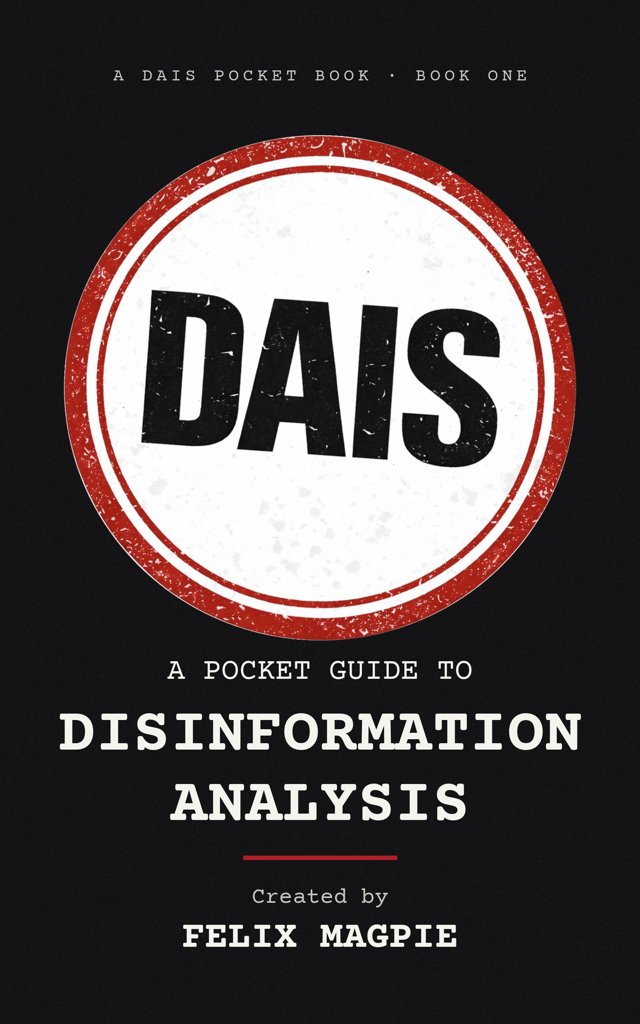
DAIS: A Pocket Guide to Disinformation Analysis
How misinformation differs from disinformation. How whataboutism and false dilemmas work. How bots, trolls and sock puppets operate. How to check whether a source deserves your trust.
And the habit that matters most: separating what you can observe from what you think it means, and from who you think is responsible. Because your gut gets a vote, but it doesn't get to count them.
Kindle and paperback. Free to read with Kindle Unlimited.
Inside
- 35 entries in six parts, from the basics to a full worked example
- Real, documented cases, from the Southport rumours to AI fakes and state-run networks
- Fictional examples that make each trick easy to spot
- The common mistakes that catch clever people out
- The DAIS Checklist and a toolkit of free verification tools
Free download
The DAIS Checklist
Seven steps to use on anything that smells off. Print it, stick it on the fridge, keep it on your phone.
- The claimWhat exactly is being claimed? Write it in one sentence.
- The sourceWho made it, who's spreading it, and what's their track record?
- The evidenceCan you find the original? Is the quote complete?
- The techniqueIs emotion or urgency doing the work?
- The behaviourOrganic echo, open campaign, or hidden coordination?
- The assessmentWhat do you know, infer, and not know? How confident are you?
- The check on yourselfWould you accept this evidence from someone you disagree with?
Coming soon
DAIS Check
Paste a post, article or meme and get it taken apart the DAIS way, in plain English or analyst language. It never guesses who's behind something, and it tells you exactly what to check.
Founding members get early access. No spam, ever.
A frightening claim with no source, and a push to share before you check.
Example report
Case files
Real cases, broken down.
Regular breakdowns of real-world disinformation: what was claimed, how it spread, what the evidence says, and what you can learn from it.
Free to read. Subscribe to get each case file by email.
Training and talks
Bring DAIS to your team.
Practical, plain-English sessions built on the DAIS method. Engaging, even-handed and grounded in real cases.
Schools and colleges
Workshops for students and training for teachers on spotting manipulation and checking sources.
Comms teams and councils
What to do when a false story about you starts spreading, and how to check before you respond.
Talks and events
Conferences, festivals and podcasts. Lively, practical and occasionally funny.
About
Felix Magpie
Felix Magpie spent more than twenty years in music, live events and campaigns, learning how stories spread, how crowds behave and how quickly a rumour can sell out a room. He now works in disinformation analysis.
He believes the best defence against manipulation is not cynicism but curiosity, and that most people are far harder to fool once they know what the tricks look like.
Why a magpie? Researchers who tested the idea found magpies are wary of shiny things. They land a short distance away, tilt their heads and look again. That's the whole method in one bird.
Contact
Say hello.
Training, talks, schools, press, or a post you'd like taken apart.
Find DAIS online: @disinfoanalysis